
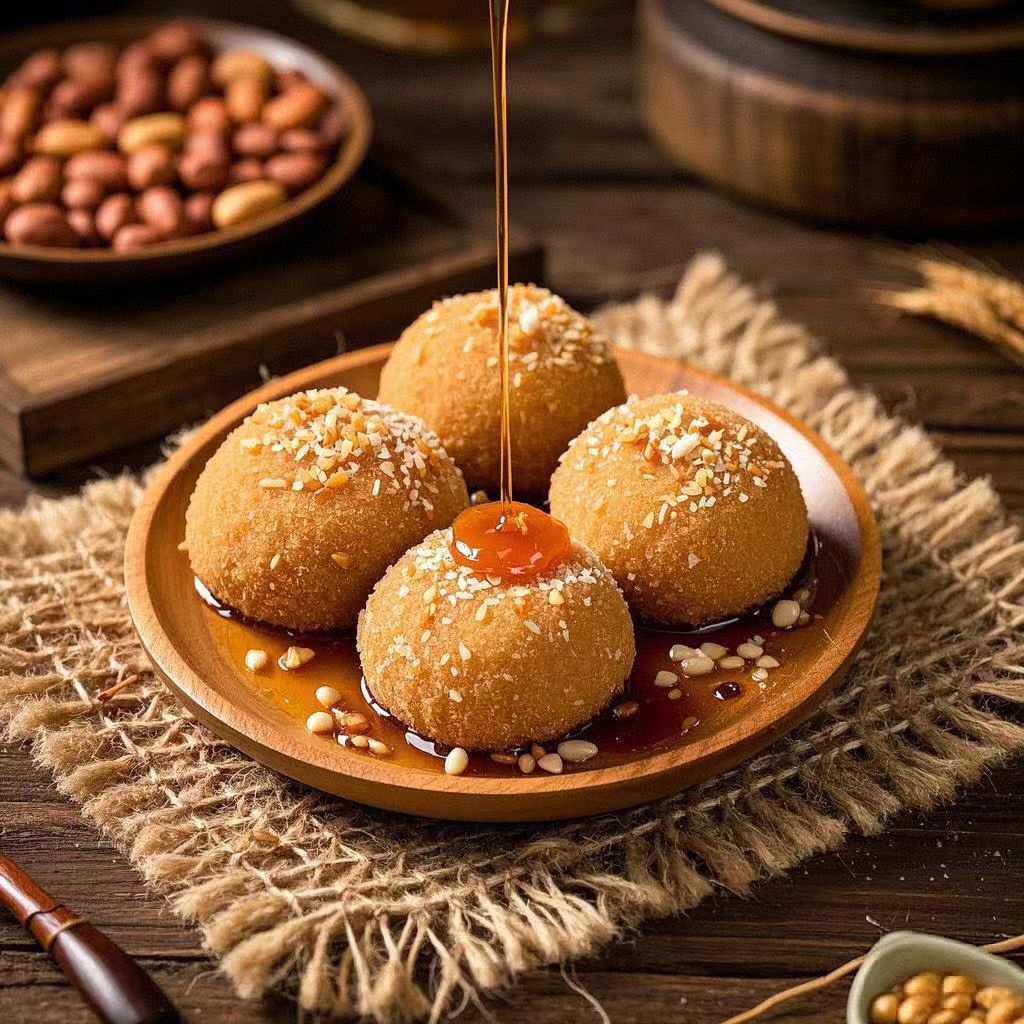
San Da Pao (literally “Three Cannons”) is not just a snack; it is a spectacular performance art unique to Chengdu, Sichuan. Famous for the three loud “Bang! Bang! Bang!” sounds made during its preparation, this traditional glutinous rice dessert combines sweet brown sugar, roasted soybean powder, and warm, chewy rice cakes.
If you are planning a Chengdu food tour, witnessing the making of San Da Pao at the Qingyang Palace Flower Fair or in downtown snack streets is an unforgettable experience that engages both your hearing and taste buds.
🧨 What is San Da Pao? (The “Three Cannons” Explained)
San Da Pao is a traditional Sichuan snack made primarily from glutinous rice (sticky rice). Its dramatic name comes from the cooking process:
- The chef grabs a large lump of warm, pounded rice paste (Ciba).
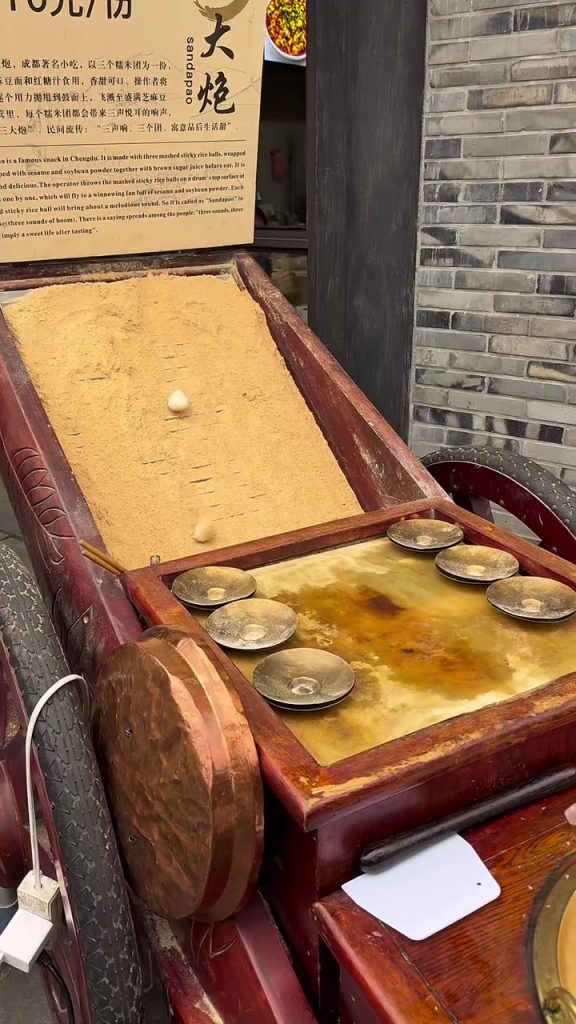
- They tear off three small balls and forcefully throw them onto a wooden board.
- The impact vibrates metal plates nearby, creating three loud cannon-like reports: “Dang! Dang! Dang!”
- The rice balls bounce into a tray filled with soybean powder and sesame powder, getting coated instantly.
Served warm and drizzled with thick brown sugar syrup, it is traditionally paired with Lao Ying Tea (Hawk Tea) to balance the sweetness.
💡 Quick Fact: Unlike cold snacks, authentic San Da Pao is served warm. The rice balls remain slightly hot when they reach your plate, offering a soft, non-sticky, and melt-in-your-mouth texture.
🎭 The History: From Flower Fairs to City Icon
Originally, San Da Pao was exclusively sold during traditional “Flower Fairs” (Hua Hui) in old Chengdu. It was a special form of selling Ciba (pounded rice cake) that relied on sound and spectacle to attract crowds.
- The Golden Era: In the past, the lively scene of the chef throwing rice balls became so popular that San Da Pao joined Zhang Liangfen (Jelly Noodles) and Tang You Guo Zi (Sugar-Oil Fruits) as the “Big Three” dominant snacks of the Flower Fair.
- Award-Winning Taste: In 1990, the Chengdu Municipal Government officially awarded the title of “Chengdu Famous Snack” to the version sold by “Fulu Xuan Haozi Dong”, recognized for its authentic flavor and high quality.
- National Fame: Master maker Li Changqing from Shuangliu County inherited his family’s secret recipe. His skills were so impressive that during a 1989 demonstration in Guangzhou, he “fired one shot to fame,” stunning locals and proving that Chengdu’s snack culture is “technically astonishing and artistically superior.”
👨🍳 How It’s Made: A Step-by-Step Performance
Watching the preparation is half the fun. Here is what happens behind the scenes:
- Preparation: A large iron pot keeps cooked, pounded glutinous rice warm over a low flame.
- The Setup: A wooden board is arranged with 12 copper plates stacked in pairs. Below sits the pot; above sits a tilted bamboo sieve filled with roasted soybean and sesame powder.
- The Throw: A strong chef rhythmically pulls out rice paste, divides it into three balls, and hurls them at the board.
- The Sound: The balls hit the board, causing the copper plates to clang loudly (“Peng! Peng! Peng!”), mimicking cannon fire.
- The Coating: The balls bounce off the board, roll up the sieve, and get covered in powder.
- Serving: An assistant collects the three balls, places them on a plate, drizzles generous brown sugar syrup, and sprinkles extra sesame seeds.
As Ms. Li Xiuhuan, a renowned global citizen, once exclaimed after watching the show: “The world is full of wonders… Chengdu has such a vibrant snack! It’s truly eye-opening!”
🏆 Where to Eat the Best San Da Pao in Chengdu?
While many stalls sell San Da Pao, looking for authenticity is key. Here are the top recommendations based on historical reputation and local reviews:
- Fulu Xuan Haozi Dong (福禄轩耗子洞): The most legendary spot, officially recognized as a “Chengdu Famous Snack” in 1990. Known for the most authentic taste and traditional technique.
- Qingyang Palace Flower Fair (青羊宫花会): If you visit during the traditional fair (usually in spring), this is the original home of San Da Pao. The atmosphere here is unmatched.
- Jinli Ancient Street & Kuanzhai Alley: Great for tourists wanting to see the performance while exploring other Sichuan snacks. Look for stalls with long lines and loud noises!
❓ Frequently Asked Questions (FAQ)
Why is it called “Three Cannons”?
The name comes from the three loud banging sounds produced when the sticky rice balls are thrown onto a wooden board, vibrating metal plates. The sound resembles cannon fire.
What does San Da Pao taste like?
It is sweet, fragrant, and chewy. The outer layer is coated in nutty soybean and sesame powder, while the inside is soft, warm glutinous rice. The brown sugar syrup adds a rich caramel-like sweetness. It is designed to be non-sticky and easy to digest.
Is San Da Pao spicy?
No! Unlike many Sichuan dishes, San Da Pao is a sweet dessert. It is often eaten with Lao Ying Tea, a slightly bitter herbal tea that perfectly cuts through the sweetness.
When is the best time to see the San Da Pao performance?
While available year-round in tourist areas, the most authentic experience is during the annual Qingyang Palace Flower Fair in spring, where the tradition originated. The busier the crowd, the more energetic the chef’s performance becomes!
📢 Plan Your Chengdu Food Trip
Don’t just read about it—hear it and taste it! Add San Da Pao to your must-try list when visiting Chengdu. It is more than food; it is a piece of living history that proves why Chengdu is a UNESCO City of Gastronomy.
(Keywords: Chengdu travel guide, Sichuan food, best street food in China, traditional Chinese desserts, glutinous rice balls, brown sugar Ciba)

Comments (0)